
How to Build an Influencer Marketing Campaign That Earns B2B Trust
A large audience is not the same as influence. The useful question is whether a credible person can help the right buyer trust or act on a message.
A large audience is not the same as influence. The useful question is whether a credible person can help the right buyer trust or act on a message.
LinkedIn's research found that 67% of B2B buyers use creator content to evaluate potential solutions, while 47% have visited a vendor website after engaging with that content. The opportunity is real, but it takes more than paying for a post and hoping attention turns into pipeline.
A strong influencer marketing campaign connects a business objective to a specific audience, credible voice, useful content, deliberate distribution, and defensible measurement.
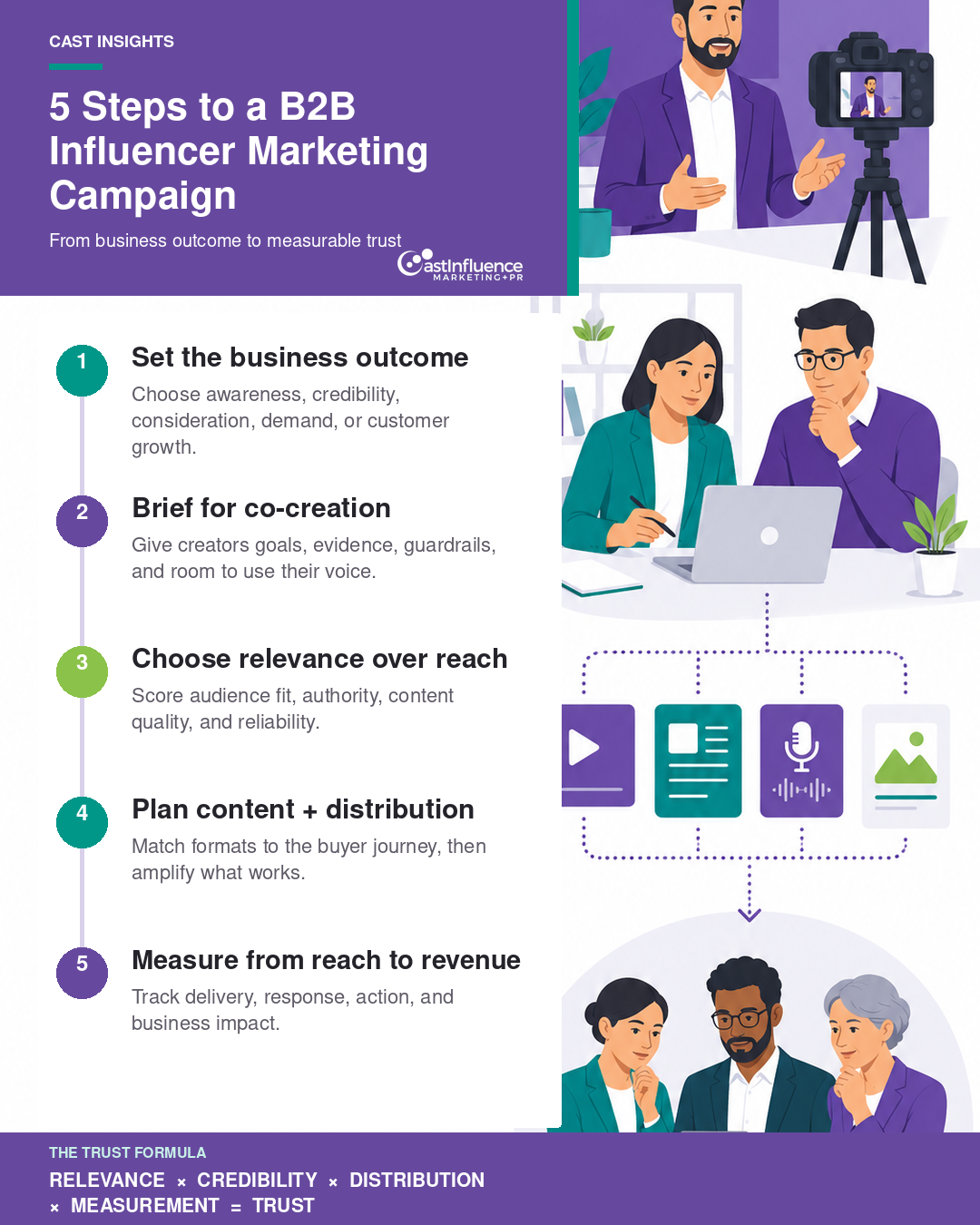
1. Start with the business decision the campaign should change
An influencer cannot rescue a vague strategy. Before building a creator list, decide what should be different after the campaign.
Choose one primary objective
Pick the outcome that will guide the brief, creative, distribution, and reporting:
- Awareness: Become known among a defined set of people or target accounts.
- Credibility: Help buyers understand a new category, technical claim, or point of view.
- Consideration: Give active buyers evidence that helps them compare approaches.
- Demand: Generate qualified visits, sign-ups, demo requests, or event registrations.
- Customer growth: Encourage adoption, advocacy, referrals, or expansion.
A campaign can produce secondary benefits, but it should not have five equal goals. Naming the primary objective prevents the team from judging an awareness program by form fills or calling a high-impression post a revenue win.
Define the audience and buyer moment
“Technology leaders” is too broad. Specify the roles, company profile, problem, and stage of awareness. For example: vice presidents of security at U.S. software companies preparing for an enterprise compliance review.
Then ask what that buyer needs from a trusted third party. A creator might name a costly problem, explain tradeoffs during evaluation, or reduce perceived risk with concrete experience.
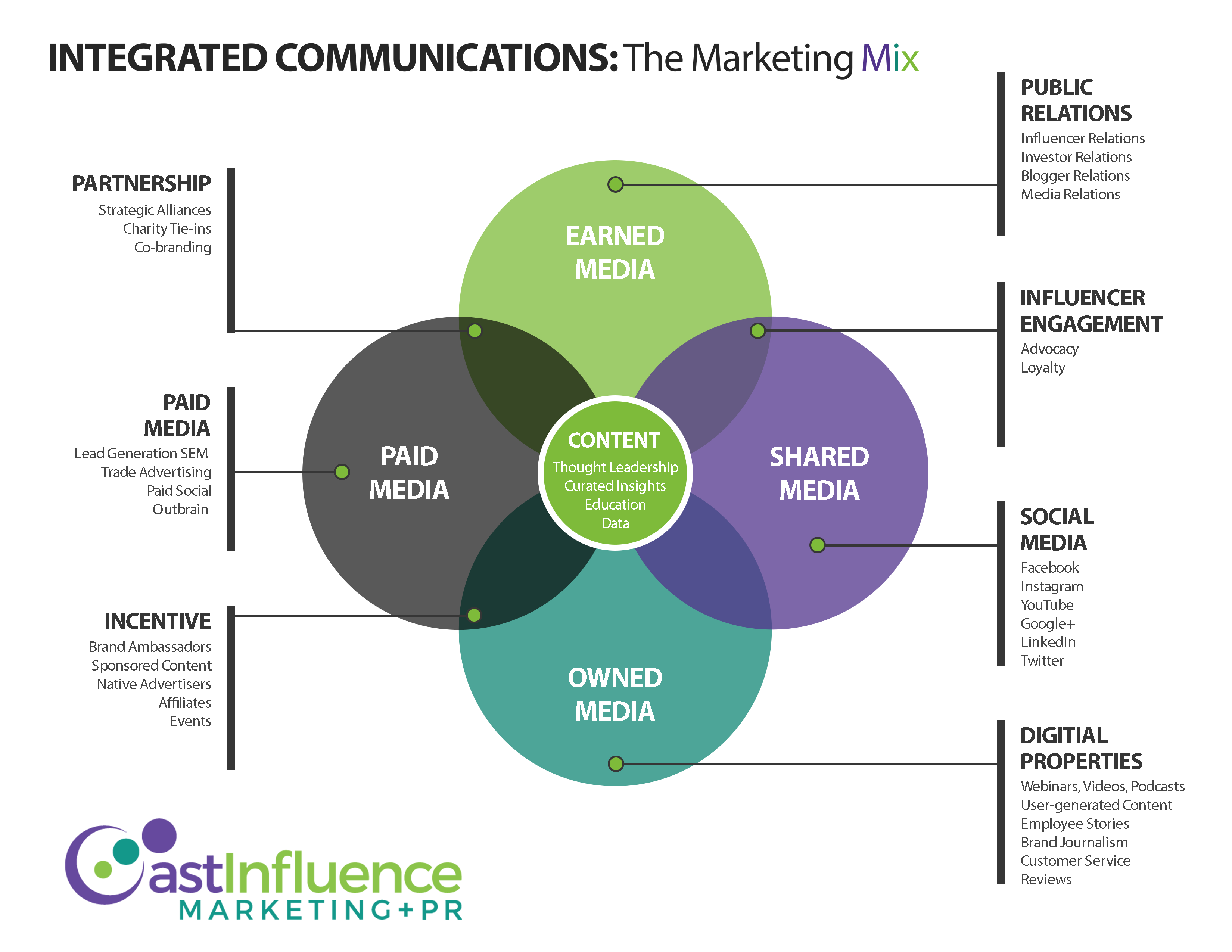
Cast Influence's guide to the difference between influencers and media explains how influencer activity can combine paid, earned, shared, and owned media. Treating it as an isolated social tactic leaves much of that value unused.
2. Build a campaign brief creators can improve
The brief should create alignment without sanding away the creator's point of view. If every sentence sounds like brand copy, the partnership loses the credibility you hired.
Create a message spine, not a script
A useful brief gives the creator:
- The campaign objective and target audience
- One central idea the audience should remember
- Two or three supporting claims with approved evidence
- Product facts, terminology, and claims that require exact language
- Examples of what the brand can and cannot credibly say
- The desired next step, if the campaign has one
- A review process with named owners and response times
Invite the creator to improve the angle, format, and phrasing. They understand the questions their audience asks and the patterns that earn attention. The brand owns accuracy; the creator should retain a recognizable voice.
Set deliverables, rights, disclosure, and guardrails
The agreement should define deliverables, timing, payment, revisions, usage rights, exclusivity, paid amplification, cancellation, and reporting access. Clarify whether the brand may edit, repost, or turn clips into ads. These permissions affect the campaign's value.
Disclosure belongs in the plan, too. The Federal Trade Commission's influencer guidance says creators should disclose material relationships with a brand and place the disclosure with the endorsement itself. Give creators clear requirements and review posts for compliance.
3. Choose influencers for relevance and credibility
Follower count is easy to compare and often the least useful field on the sheet. In B2B influencer marketing, a smaller community of qualified practitioners can be more valuable than a large, general audience.
Evaluate audience fit, expertise, and content quality
Review candidates against criteria that reflect the campaign:
- Audience fit: Are the target roles, industries, company sizes, and regions present?
- Subject authority: Has the person earned the right to speak about the problem?
- Content quality: Do they offer original, useful ideas rather than recycled summaries?
- Engagement quality: Are comments thoughtful and relevant, or generic and automated?
- Brand fit: Can the partnership feel natural without muting disagreement?
- Reliability: Do they meet deadlines, communicate clearly, and disclose partnerships?
- Channel fit: Does their strongest format match how your buyers learn?
Inspect recent posts and comments. Look for repeated engagement from people who resemble your buying committee. Use first-party audience data alongside qualitative judgment.
Use a weighted scorecard and a paid pilot
Weight audience fit and authority more heavily than raw reach. A scorecard can prioritize audience fit, expertise, content quality, engagement quality, brand fit, and reliability.
Before a multi-month program, run a paid pilot with a small group. Give each partner the same foundation but room for a distinct angle. Learn which voice, topic, and format create qualified attention.
4. Plan content and distribution as one system
An influencer marketing campaign should produce more than a single post. Design a content system that moves from insight to conversation to action.
Match formats to the buyer journey
Match formats to the buyer's needs:
- Awareness: Trend analysis, short video, event commentary, or research reactions
- Consideration: Tutorials, webinars, interviews, newsletters, or comparison frameworks
- Decision support: Customer conversations, implementation lessons, technical deep dives, or live Q&A
LinkedIn advises B2B brands to prioritize subject expertise and audience alignment over follower count, co-create instead of over-scripting, and amplify creator work that performs. Its B2B creator guidance also highlights internal experts. A credible employee, customer, partner, analyst, or niche operator may be the best fit.
Combine creator, brand, executive, and paid channels
Build distribution into the brief. The creator publishes in their native format. The brand and its executives add context. Sales shares relevant content with active accounts. Email, community, and paid media extend the strongest asset with the creator's permission.
Influencer work can also support a broader public relations and communications strategy, opening an earned-media angle or strengthening executive thought leadership.
Sequence the campaign so each piece adds information. A post can introduce the problem, a live session can unpack it, and a guide can capture sustained search and sales value.
5. Measure business impact without worshipping the last click
Influence can change how buyers think before producing a conversion. The measurement model must fit the objective and the B2B journey.
Establish a measurement ladder
Track performance at four levels:
- Delivery: On-target reach, frequency, views, and content completion
- Response: Qualified comments, saves, shares, follower growth, branded search, and engaged target accounts
- Action: Website visits, content downloads, registrations, sign-ups, demo requests, and sales conversations
- Business impact: Opportunities created or accelerated, influenced pipeline, win rate, revenue, retention, or share of voice
Report the primary KPI first, then use supporting signals to explain it. Cast Influence's guide to measuring share of voice shows how to assess visibility across social, search, paid, and earned channels.
Build tracking and learning into the campaign
Give each creator and asset a consistent tracking structure. Google Analytics recommends relevant UTM parameters so referral traffic can be identified in acquisition reports. Add platform data, landing-page events, CRM campaign membership, and a “how did you hear about us?” field.
For larger programs, use matched audiences, lift tests, or geographic holdouts when budget supports them. Incrementality asks what the campaign caused, not what happened after a click. LinkedIn's 2026 guidance on incremental measurement recommends one business question and adequately scaled exposed and control groups.
Hold a learning review. Which creator produced qualified conversation? Which message drew target accounts? What did sales hear? Use the answers to renew strong partnerships and design the next campaign.
Frequently asked questions about influencer marketing campaigns
How much should a B2B influencer marketing campaign cost?
There is no reliable universal rate. Cost depends on expertise, audience, format, production, rights, exclusivity, distribution, and campaign length. Price the partnership, not only the post.
Are micro-influencers effective for B2B brands?
Yes, when “micro” means meaningful influence in the target market. A practitioner with a small audience of security leaders may outperform a general business creator with greater reach.
What is the best KPI for an influencer marketing campaign?
The best KPI is the one closest to the campaign's primary objective. For awareness, that may be on-target reach or brand lift. For consideration, it may be engaged target accounts or high-value website actions. For demand, use qualified conversions, opportunities, influenced pipeline, or incremental revenue.
Treat influence as a trust system
The strongest campaign is one in which the audience, message, messenger, distribution, and evidence reinforce each other.
Founders should protect the sharp point of view that makes the company worth discussing. CMOs should turn that point of view into a disciplined program with clear governance and measurable outcomes. When both happen, influencer marketing stops being rented reach and becomes a repeatable way to earn buyer trust.
Working through this right now?
Score the moment in two minutes, or talk it through with a senior operator.