
Executive PR Strategy: A Leadership Playbook for CEOs and CMOs
An executive PR strategy should begin with business priorities, not publicity tactics
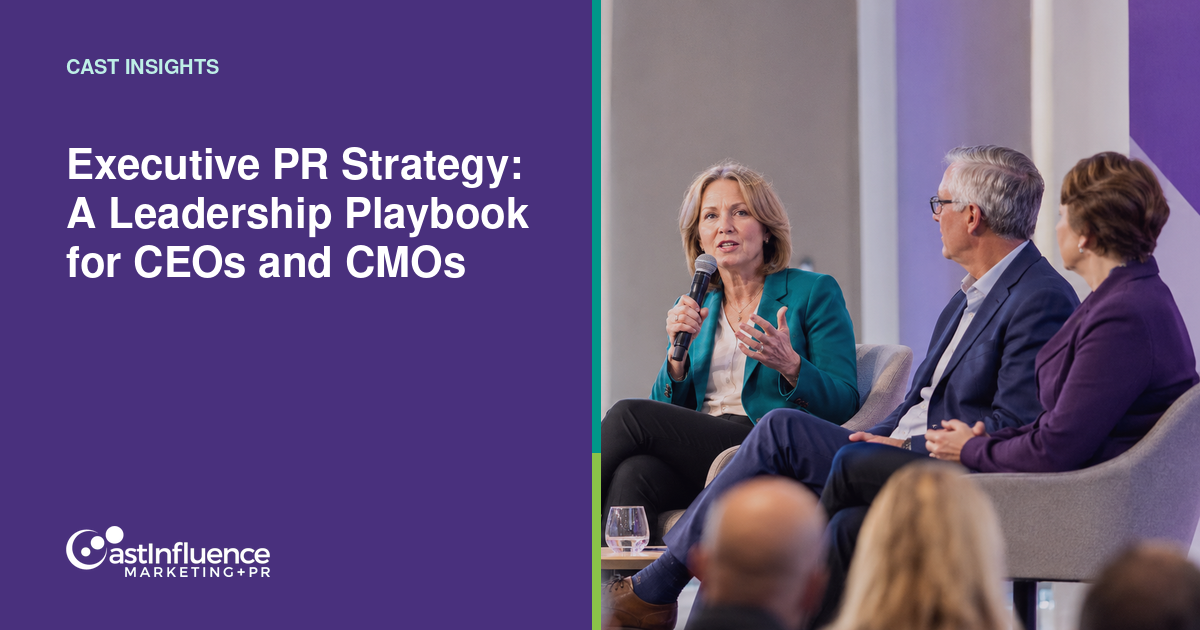
Executive visibility is not a vanity project. Every interview, keynote, post, and employee update teaches people how to interpret your company. When those moments reinforce one another, leadership becomes easier to understand and trust.
An executive PR strategy should begin with business priorities, not publicity tactics. The aim is to make the executive credible with the right stakeholders before a launch, funding event, market shift, crisis, or buying decision raises the stakes.
Why Executive PR Belongs on the Leadership Agenda
Executives already shape reputation, whether they manage it deliberately or not. A CEO may define the company’s ambition and values. A CMO may connect the market narrative to customer needs and growth. A technical, product, or regional leader may carry greater authority on a specific issue. PR makes those roles coherent and useful.
The trust environment makes that discipline important. A 2026 Trust Barometer CEO Insights report found that global concern about business leaders intentionally misleading people rose 11 points from 2021 to 2026. The same research found that people form opinions of CEOs through several signals, including employee word of mouth, formal media interviews, independent creators, news coverage, and executives’ own social channels.
Trust grows when leadership behavior, company proof, employee experience, and public communication tell the same story.
The CEO, CMO, and communications leader need shared ownership:
- The CEO sets the leadership posture and speaks where only the chief executive can carry the message.
- The CMO connects visibility to positioning, audiences, launches, and the go-to-market plan.
- The communications leader turns that direction into messages, opportunities, preparation, and risk controls.
Build the Strategic Foundation Before Choosing Tactics
Tie the program to a consequential business moment
Start with the change the business needs the market to understand: a market entry, product launch, category shift, acquisition, hiring push, or effort to rebuild confidence.
Choose one primary outcome for the next two quarters: earning credibility with buyers, explaining a strategic shift to investors, making a technical category accessible, or leading on a fast-moving issue. This prevents the calendar from becoming a collection of unrelated appearances and posts.
The company’s public relations strategy should connect internal and external communication to that goal. A funding announcement, for example, can support a longer narrative about customer value, market timing, leadership conviction, investment, and what comes next.
Define audiences, narrative, proof, and boundaries
A useful executive narrative is more specific than “innovation” or “customer obsession.” Build it from four parts:
- Audience: Who must understand or believe something new?
- Tension: What is changing, misunderstood, or costly for that audience?
- Point of view: What does the executive believe that adds clarity?
- Proof: What operating experience, customer evidence, research, or results support that belief?
Then define boundaries: topics the executive can lead, topics that need another expert, and subjects requiring legal, people, security, or board review. Knowing when not to speak is part of credible leadership.
Turn Executive Expertise Into a Repeatable Visibility System
Create a defensible point of view
Strong thought leadership does not repeat product messaging in a personal tone. It helps an audience interpret a problem. The executive should answer three questions: What are others missing? What have we learned by doing the work? What should a leader do differently?
Senior buyers use thought leadership to evaluate companies. In LinkedIn's B2B thought leadership research, 75% of decision-makers and C-suite executives said a piece had prompted them to research a product or service they had not considered. Yet only 15% rated the overall quality they read as very good.
Executives who use evidence, challenge a familiar assumption, and offer concrete guidance are more useful than leaders who simply comment on the news.
Use earned, owned, shared, and live channels together
Do not force every idea into the same format. Give each channel a job:
- Earned media supplies independent validation and reaches established audiences.
- Owned content gives the executive room to explain a framework, research finding, or operating lesson in depth.
- Shared channels such as LinkedIn support timely conversation, repetition, and direct audience feedback.
- Live channels such as conferences, podcasts, webinars, customer events, and small executive roundtables create dialogue and relationship depth.
One substantial idea can move through all four. Original research might support a contributed article, media briefings, a conference session, executive posts, and sales conversations. That compounds a point of view instead of demanding a new idea every week.
As discovery shifts toward answer engines, consistent credentials, executive biographies, bylines, earned references, and structured owned content also help machines connect an expert with a subject. Cast Influence’s analysis of PR in a zero-click search environment explains why authority must now be legible to both people and AI systems.
Build relationships before the announcement
An executive should not meet every important journalist, analyst, creator, or convener for the first time when the company wants coverage. Identify the people whose work shapes stakeholder understanding. Follow their coverage, offer useful context without an immediate ask, make experts available, and respect a “no.”
This produces better conversations and reduces the temptation to treat every milestone as equally newsworthy.
Protect Credibility When the Stakes Rise
Prepare leaders for interviews and difficult questions
Media training should sharpen thinking, not manufacture a personality. Prepare a message spine, likely questions, proof points, language to avoid, and clear bridges back to the central issue. Rehearse under realistic pressure.
Executives should practice saying “I don’t know,” correcting a false premise, explaining uncertainty, and separating confirmed facts from what is still being investigated.
Create an issues and crisis decision protocol
Do not wait for a crisis to decide who has authority. Establish the response team, escalation thresholds, monitoring, approval path, backup spokespersons, and stakeholder order. Define which situations call for speed, more facts, or a private response.
A fast answer is not always a trustworthy one. Prioritize verified information, empathy, accountability, and useful action. If facts change, update the record plainly.
Align external visibility with employee experience
Employees will test public leadership claims against what they experience inside the company. Before an executive speaks about culture, innovation, responsible AI, customer care, or social impact, the communications team should ask colleagues closest to the work whether the message is accurate and complete.
Employees can reveal blind spots, supply stronger proof, and help leaders use language that feels real. Internal communication should precede or accompany major external moments whenever employees will be affected.
Measure Influence Without Chasing Vanity Metrics
Executive PR measurement should show whether the market is understanding and acting on the intended narrative. Track a balanced set of signals:
- Message pull-through: Are priority ideas appearing accurately in coverage and stakeholder conversations?
- Audience quality: Are the right buyers, investors, candidates, analysts, employees, and partners engaging?
- Authority: Is the executive receiving better media inquiries, speaking invitations, citations, introductions, or requests for perspective?
- Business relevance: Is visibility supporting launches, strategic accounts, recruiting, partnerships, or reputation goals without claiming unsupported attribution?
- Readiness: Can the team respond quickly and consistently when an opportunity or issue appears?
Review the program quarterly. Retire tired topics, strengthen weak proof, adjust the spokesperson mix, and prioritize formats that reach the right audiences. The best dashboard helps leaders make the next decision.
Frequently Asked Questions
What is an executive PR strategy?
An executive PR strategy coordinates business goals, audience needs, messaging, media relations, thought leadership, speaking, social presence, employee communication, crisis readiness, and measurement to build and protect a leader’s credibility.
How is executive PR different from personal branding?
Personal branding often focuses on individual identity and reach. Executive PR connects a leader’s presence to company strategy, stakeholder trust, earned credibility, and organizational risk.
Which executive should be the primary spokesperson?
Choose the executive with the strongest relevance, expertise, credibility, and availability. The CEO should lead on company direction, values, or accountability; another executive may be more authoritative on a specialized issue.
How long does it take to build executive visibility?
Durable authority usually requires a consistent cadence over multiple quarters. Timing depends on the executive’s starting profile, point of view, proof, audience access, and willingness to participate.
What should an executive PR plan include?
Include the objective, priority audiences, narrative and proof, spokesperson roles, topic boundaries, channel plan, cadence, media and event targets, preparation, crisis protocol, approvals, and a small set of meaningful measures.
Make Leadership Visibility Earn Its Place
The strongest public relations strategies for executive leadership do not chase attention for its own sake. They create a disciplined way for leaders to explain change, demonstrate judgment, contribute useful ideas, and show up credibly when the pressure is highest.
For CEOs and CMOs, connect visibility to a business priority, build the narrative on proof, prepare for scrutiny, and stay consistent. That is how executive presence becomes an operating asset rather than a series of appearances.
What to do next
Working through this right now?
Score the moment in two minutes, or talk it through with a senior operator.